
Unmatched Energy Efficiency
Cut energy use by 25%–40% with radiant-focused panels that reduce fan power and circulation needs.

Revolutionary Decoupled Radiant Cooling (DRC) Technology
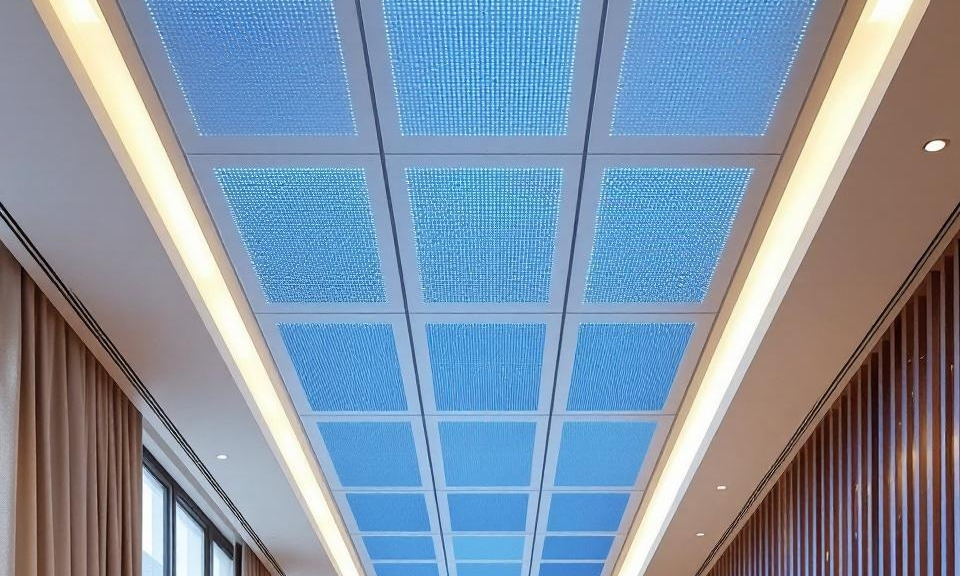
The Industry
Cooling is the single largest electricity load while traditional Air Conditioning is costly to maintain, energy-intensive, and a major contributor to global carbon emissions.
In high-density cities like Hong Kong, commercial and industrial building operations account for 70% of total electricity consumption in which around 30% comes from air conditioning. (EMSD Hong Kong Energy End-Use Data 2025)
Rising global temperatures increase cooling demand, which accelerates global warming through high energy use, not to mention the rising electricity demand from the R&D of AI and other technology innovation
2013–2023
Our Solution
Cooling spaces through a pinpoint radiative heat exchange rather than circulating cold air. A fundamental shift from cooling air to cooling people and surfaces directly
Integration of advanced materials science with DRC panels to achieve high IR transmittance and structural durability.
“Turn cooling into a more elegant form” — a pinpoint temperature control system that works like a light switch.
Cut energy use by 25%–40% with radiant-focused panels that reduce fan power and circulation needs.
No air circulation means minimal airborne cross-contamination—ideal for hospitals and shared offices.
Experience quiet, draft-free cooling with uniform temperature distribution which creates a more personalized cooling experience.
| Attribute | Radiant Cooling | Air-based systems (e.g., VRF, AHU, FCU) |
|---|---|---|
| Cooling Principle | Cools surfaces (ceilings, floors, panels) so occupants dispose heat by radiation. | Cools air directly and distributes conditioned air to spaces. |
| Sensible vs Latent Load Handling | Excellent for sensible loads; poor at removing moisture. | Handles both sensible and latent loads via supply air and dehumidification. |
| Cooling Capacity Density | Moderate; lower peak capacity per area. | High peak capacity; can deliver large sensible + latent loads quickly. |
| Energy Performance | High part-load efficiency. | Efficient with modern VRF and high-efficiency AHUs; higher fan energy for air movement. |
| Indoor Air Quality | Requires separate DOAS ventilation for IAQ and moisture control. | Integrated ventilation and filtration options; easier to control IAQ centrally. |
| Space and Architectural Impact | Minimal ductwork; needs ceiling/floor integration and structural coordination. | Requires space for ducts, plant rooms, ceiling voids; more intrusive in retrofits. |
| Installation Complexity | Moderate (integration with structure, piping routing). | Moderate; easier for modular installs (VRF) but complex for central AHU + ductwork. |
| Maintenance | Access to panels/piping needed; risk of hidden leaks. | Routine maintenance; easier fault isolation. |
| Condensation Risk | High; needs robust humidity control. | Lower if ventilation and dehumidification sized correctly; condensation mainly at coils. |
How it works
Read the system in three moves: remove sensible heat at the panel, manage fresh-air moisture separately, then tune each control loop.
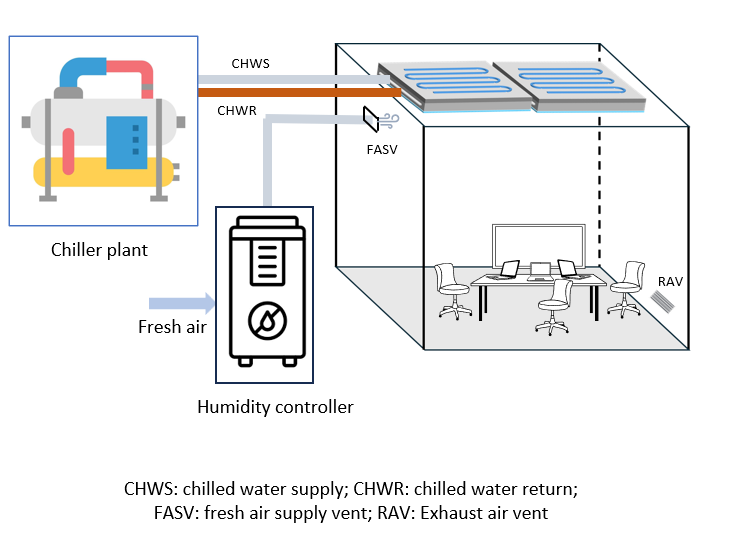
DRC systems aims to deal with sensible load: cooling water temperature 5–15°C; indoor air temperature 26.0 ± 1°C; operating temperature 24 ± 0.5°C.
Fresh air ventilation system deal with latent load: relative humidity 50–60%.
Thermostat and humidity controller work independently.
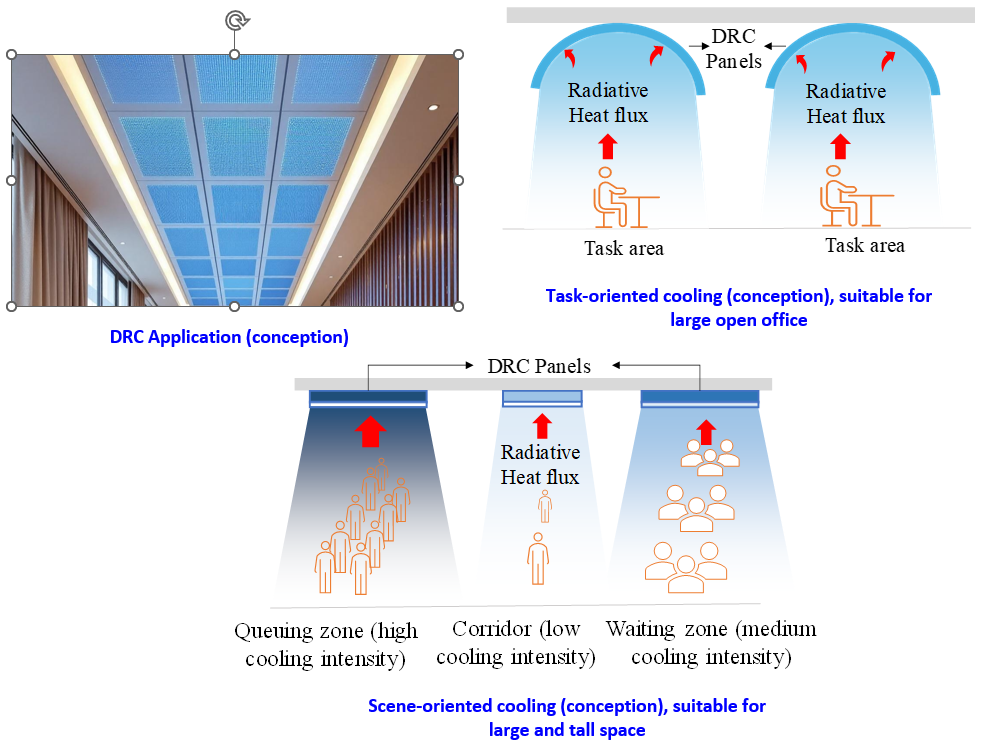
DRC Panels · Radiative Heat flux · Task area
Queuing zone (high cooling intensity) · Corridor (low cooling intensity) · Waiting zone (medium cooling intensity)
Technology
“Radiant cooling is a space-cooling approach that removes heat by thermal radiation and conduction from room surfaces (floors, ceilings, or walls) rather than primarily by blowing cold air. Systems lower surface temperatures so occupants and objects shed heat to those surfaces, reducing perceived temperature without needing as much cold supply air.”
A unique blend of thermal-engineering polyolefin membranes and inorganic microparticles for high IR transmittance.
Optimized material structure that manages condensation risk while maintaining peak cooling performance.
A decade of dedicated research at City University of Hong Kong, transitioning from lab to commercial scale.
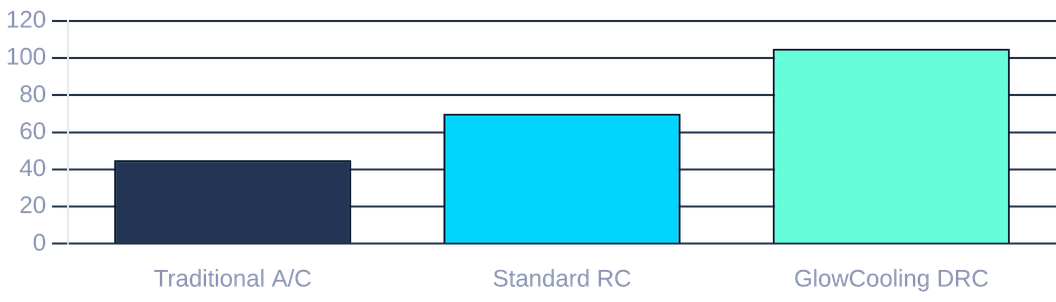
Project output depends on panel layout, water temperature, and humidity conditions.
Condensation control remains part of the complete system design.
Opportunity
Annual government air-conditioning expenditure in Hong Kong alone. A massive immediate addressable market for DRC replacement.
First-Mover Advantage: No comparable radiant cooling competitor currently exists in the Asian market.
Proprietary Tech: 10 years of R&D and material science create a high barrier to entry.
Scalable Model: B2B project-based entry transitioning to a massive B2C retail rollout.
Ideal for large open-plan offices and government buildings. Provides uniform comfort without noisy drafts, significantly reducing operational overhead.
Zero air circulation eliminates the risk of airborne pathogen spread, creating a safer environment for patient recovery and respiratory health.
Democratizing green technology with affordable, compact DRC panels designed for every household to combat rising energy costs.
Team


Hiring
We are looking for project managers from building service and mechanical engineering backgrounds.
Contact Us

